The big picture of consumer debt has been relatively positive, especially during the pandemic with many lower/middle-class households receiving a significant revenue boost as a result of the government's various Covid-19 relief measures.
That changed at the end of 2021. Here's a blurb from the article "Shocking Consumer Credit Numbers: US Credit Card Debt Soars Most On Record With Savings Long Gone" by Tyler Durden/Zero Hedge
While it is traditionally viewed as a B-grade indicator, the November consumer credit report from the Federal Reserve was an absolute stunner and confirmed what we have been saying for month: any excess savings accumulated by the US middle class are long gone, and in their place Americans have unleashed a credit-card fueled spending spree.
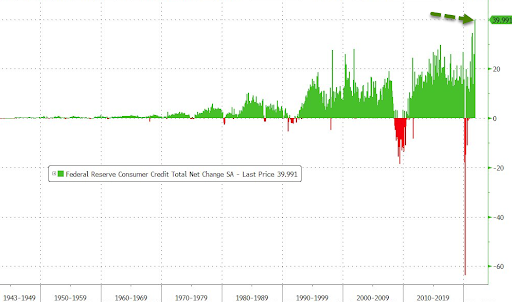
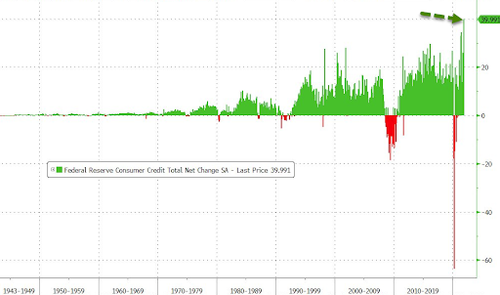
Here are the shocking numbers: in November, consumer credit exploded by a whopping $40 billion, double the expected $20 billion print, more than double the $16 billion October number, and the highest on record!
You can read the full article at this link.
Is this a bad omen for consumers and, potentially, the U.S. economy? I guess we'll see.
The big picture of consumer debt has been relatively positive, especially during the pandemic with many lower/middle-class households receiving a significant revenue boost as a result of the government's various Covid-19 relief measures.
That changed at the end of 2021. Here's a blurb from the article "Shocking Consumer Credit Numbers: US Credit Card Debt Soars Most On Record With Savings Long Gone" by Tyler Durden/Zero Hedge
While it is traditionally viewed as a B-grade indicator, the November consumer credit report from the Federal Reserve was an absolute stunner and confirmed what we have been saying for month: any excess savings accumulated by the US middle class are long gone, and in their place Americans have unleashed a credit-card fueled spending spree.
Here are the shocking numbers: in November, consumer credit exploded by a whopping $40 billion, double the expected $20 billion print, more than double the $16 billion October number, and the highest on record!
You can read the full article at this link.
Is this a bad omen for consumers and, potentially, the U.S. economy? I guess we'll see.