the Peter G. Peterson Foundation, an organization dedicated to addressing America's long-term fiscal challenges to ensure a better economic future, published a 14-chart "fiscal story of 2021" post in December.
It's a quick and easy look at some of the major fiscal issues facing America.
There are a few that stand out to me as issues that need considerable focus to ensure a stable U.S. economy going forward.
Obviously, the U.S.'s continued overspending (annual deficits) and unsustainable debt levels are first and foremost.
But, from a public policy standpoint, entry number 10 - "Healthcare costs are one of largest drivers of the long-term growth in federal spending" - must be taken much more seriously and addressed in some substantive way to avoid both government and individual financial ruin.
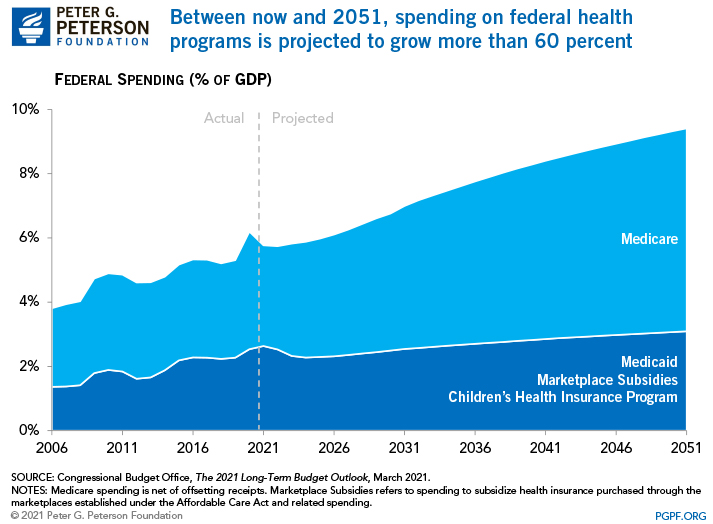
10. Healthcare costs are one of largest drivers of the long-term growth in federal spending.
Due to inefficiencies in the U.S. healthcare system as well as the aging population, the federal government’s spending on major healthcare programs like Medicare and Medicaid are projected to grow rapidly from 5.8 percent of GDP in 2021 to 9.4 percent of GDP by 2051.
And entry number 11 -"Interest payments were low in 2021 relative to the size of the economy but are projected to rise sharply throughout the coming years" - is too often ignored due to the Federal Reserve Bank's efforts the past decade to keep interest rates artificially low. As interest rates move toward more normal levels - if that's ever allowed - debt service will severely hinder government spending without significant tax increases on all Americans.
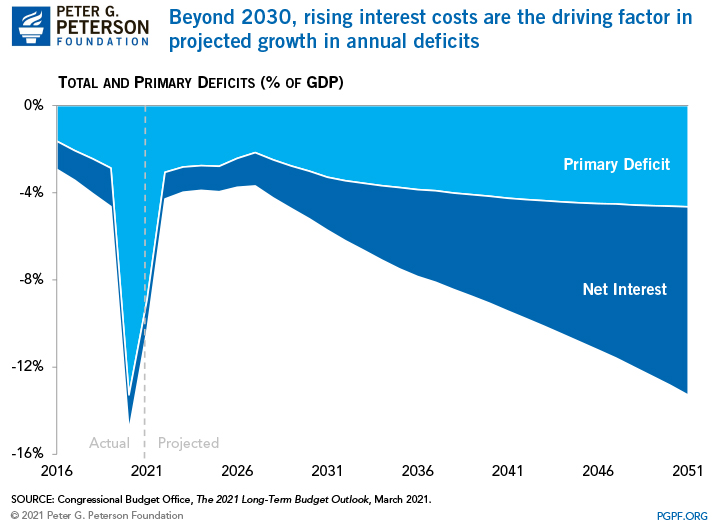
11. Interest payments were low in 2021 relative to the size of the economy but are projected to rise sharply throughout the coming years.
Within a couple of decades, CBO estimates that interest costs will exceed the size of primary deficits (or the difference between spending and revenues excluding debt service) and become the main driver of growing annual deficits.
Which fiscal challenges do you feel are most important as America's financial future evolves over the coming years?
the Peter G. Peterson Foundation, an organization dedicated to addressing America's long-term fiscal challenges to ensure a better economic future, published a 14-chart "fiscal story of 2021" post in December.
It's a quick and easy look at some of the major fiscal issues facing America.
There are a few that stand out to me as issues that need considerable focus to ensure a stable U.S. economy going forward.
Obviously, the U.S.'s continued overspending (annual deficits) and unsustainable debt levels are first and foremost.
But, from a public policy standpoint, entry number 10 - "Healthcare costs are one of largest drivers of the long-term growth in federal spending" - must be taken much more seriously and addressed in some substantive way to avoid both government and individual financial ruin.
10. Healthcare costs are one of largest drivers of the long-term growth in federal spending.
Due to inefficiencies in the U.S. healthcare system as well as the aging population, the federal government’s spending on major healthcare programs like Medicare and Medicaid are projected to grow rapidly from 5.8 percent of GDP in 2021 to 9.4 percent of GDP by 2051.
And entry number 11 -"Interest payments were low in 2021 relative to the size of the economy but are projected to rise sharply throughout the coming years" - is too often ignored due to the Federal Reserve Bank's efforts the past decade to keep interest rates artificially low. As interest rates move toward more normal levels - if that's ever allowed - debt service will severely hinder government spending without significant tax increases on all Americans.
11. Interest payments were low in 2021 relative to the size of the economy but are projected to rise sharply throughout the coming years.
Within a couple of decades, CBO estimates that interest costs will exceed the size of primary deficits (or the difference between spending and revenues excluding debt service) and become the main driver of growing annual deficits.